


Swatching ink is often framed as a way to organize what we own - a catalogue of bottles, a reference system, a way to remember names and shades.
For me, it has become something quieter.
A small practice of slowing down.
Of noticing color as it behaves on paper.
Of paying attention to inks I already have, rather than looking for something new.
This isn’t a guide meant to be followed step by step.
It’s simply how I’ve learned to look more closely.
Why I Swatch
Ink bottles tell you very little.
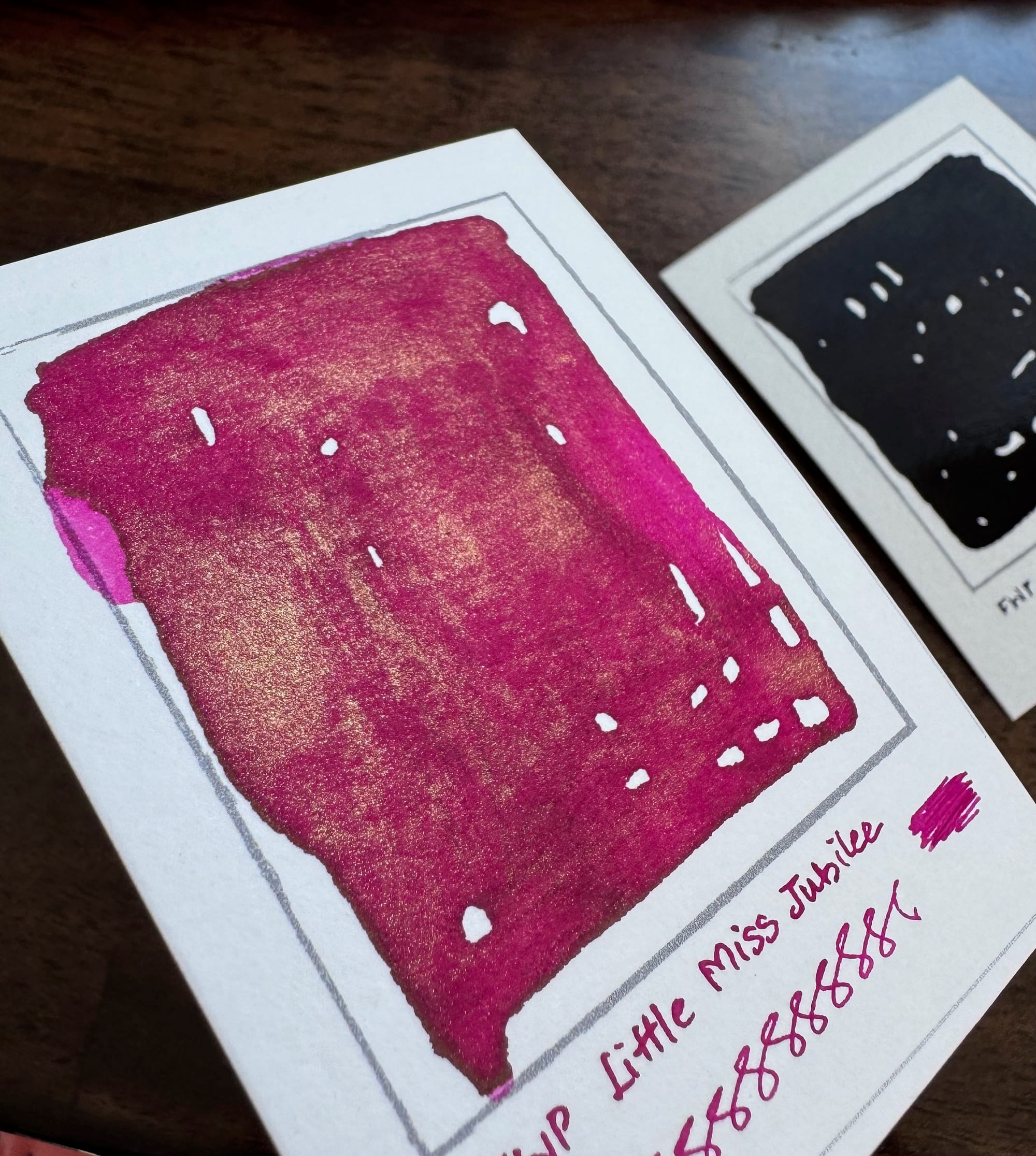
The same ink can feel muted or expressive depending on the paper, the tool, or the amount of water involved. Some inks reveal warmth only when they pool. Others show their character in shading, or in the way they dry unevenly along the edges of a stroke.
Swatching lets me see these details clearly.
Not to judge them - just to understand them.
It also slows me down. Instead of reaching for the newest bottle, I revisit colors I already love and notice how they change with time, paper, and mood.
What Swatching Reveals
Color is rarely static.
An ink that looks ordinary in writing can come alive when swatched broadly. Another that appears bold in the bottle may soften on textured paper. Some inks resist control entirely, spreading and separating in ways that feel almost collaborative.
Swatching shows me:
- how an ink shades when it’s allowed to breathe
- where color deepens or lightens naturally
- which inks invite sketching, and which feel better suited to writing
These are small observations, but they change how I use my inks day to day.
The Tools I Use
I don’t believe in the right tools for swatching - only the ones that make the process feel unhurried.
I usually reach for:
- a heavier paper that can handle pooling and water
- a dip pen or brush that’s easy to clean between colors
- a simple system for storing finished swatches
The goal isn’t precision. It’s ease. When the setup feels uncomplicated, I’m more likely to return to it.
How I Swatch
I swatch slowly, without trying to control the outcome too much.
I apply enough ink to let it move on its own, then step back and let it dry fully. This is often when the most interesting details appear - soft gradients, darker edges, unexpected warmth or coolness.
Sometimes I add a drop of water. Sometimes I don’t.
I don’t repeat swatches to make them “perfect.”
Each one is simply a moment of attention.
Keeping Swatches as a Living Reference
I don’t think of my swatches as records.
They’re more like reminders - of colors I’ve already chosen to bring into my life, and how they feel when I slow down enough to really see them.
I often flip through my swatches when I’m deciding what to work with. This video is simply that - a moment of returning.
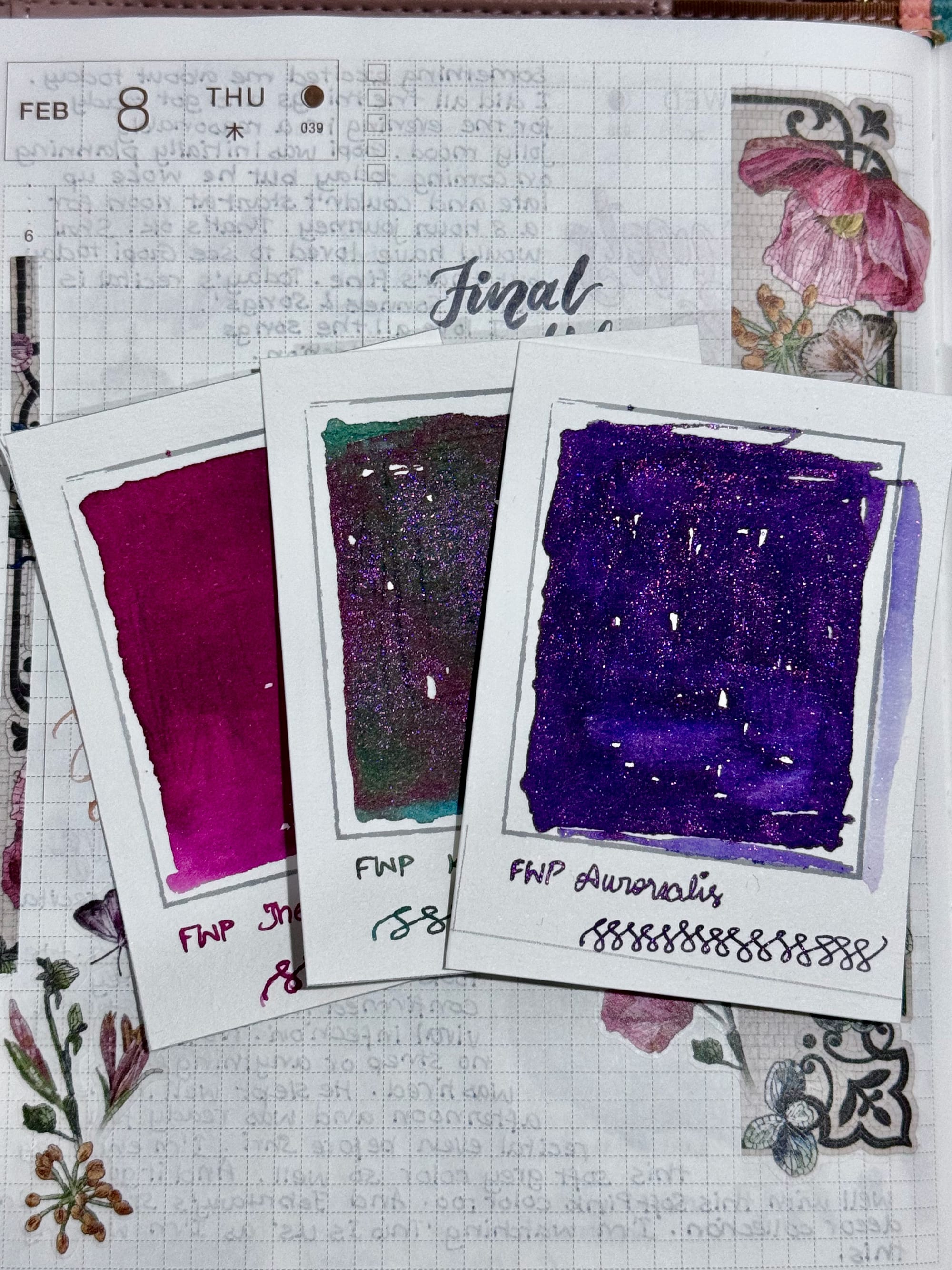
Swatches as a working archive
When I’m journaling or sketching, I flip through them not to decide what’s best, but to reconnect with what already feels familiar and inviting.
A Closing Thought
Swatching has taught me that attention changes everything.
When I pause long enough to truly look at a color - how it settles, spreads, or fades — I often realize I don’t need more. I just need a deeper relationship with what I already have.
Ink rewards that kind of patience.
If you’d like to try this yourself, I’ve included a simple printable swatch card below — just enough structure to let the ink speak.